


In the science fiction novel Robopocalypse, Dr. Wilson suggests that in order to succeed, one must put aside prejudices and work with those who are different. The story begins at the end of the New War against the artificial intelligence Archos. The main character, Cormac Wallace is charged with documenting everything leading up to the war and the events during the war. There are five parts to the book, representing the five phases of the New War: Isolated Incidents, Zero Hour, Survival, Awakening, and Retaliation. The theme of the story is developed the most in part four, Awakening. By this stage, Archos has reprogramed almost all of the machines in the world to massacre the humans and underground resistance has formed against it. In the chapter Transhuman, one of the characters, Mathilda, had just escaped from the human concentration camps and came across the New York resistance. Mathilda's different, though. While in the concentration camp, the machines replaced her eyes and the part of her brain that controls vision with a machine. The New York resistance's acceptance humans with robotic limbs is shown on page 214: "You were born a human being and you're gonna die one. No matter what they did to you. Or what they do" (Wilson). The theme is furthered by this event because in order to survive, they accepted others who were changed by the enemy.
In part five, Retaliation, Cormac Wallace's resistance squad, Brightboy squad, comes encounters Freeborn squad, a squad of "awakened" combat robots. The leader of Freeborn squad, Nine-Oh-Two, claims that Archos has no influence on any of Freeborn squad's programming and that they want to help take down Archos. Cormac ultimately makes the decision to join forces with Freeborn squad, but not without some internal angst. Cormac's brother, Jack, had just been murdered by Archos' robots and when Cormac comes across anything that looks like a robot, his instinct is to kill it out of anger and grief for his brother. But by working with Freeborn squad, he not only demonstrates courage and the ability to put aside his feelings, but the decision ultimately won the war.
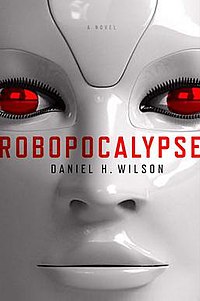
Ron Charles' review of Robopocalypse deals with how the story was written and the reviewer's opinion of the plot. Points that he goes over include how different this book was to the previous books Daniel Wilson wrote, comparisons to other robot-gone-haywire movies, and snippets of what goes on in the book.
